From Reel Spins to Reservation Systems: Mapping Casino Promotions Across Gaming, Shows, and Dining
Frankie Keller · Oct 11, 2026
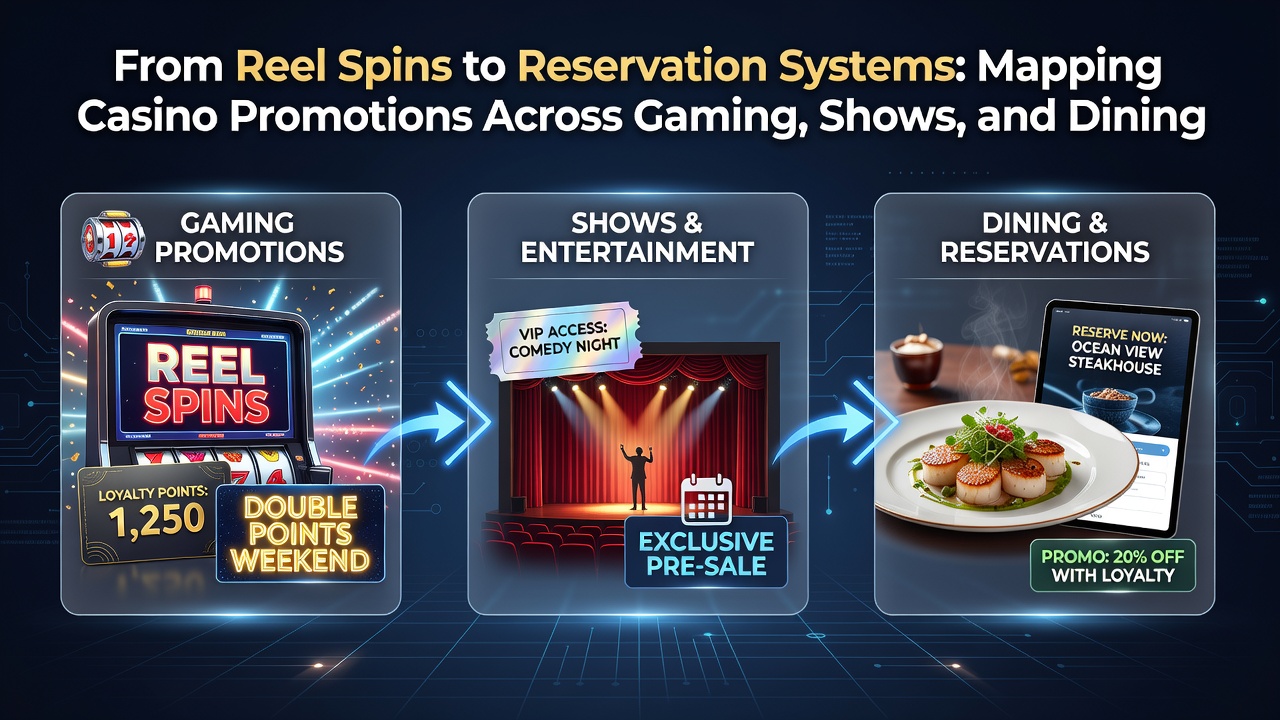
From Reel Spins to Reservation Systems: Mapping Casino Promotions Across Gaming, Shows, and Dining
Modern casino operations now connect slot reel mechanics directly to reservation platforms that handle show tickets and dining tables, creating unified promotion pathways across properties. Data from the American Gaming Association indicates these integrated systems expanded across multiple jurisdictions through 2025 and into October 2026, with operators tracking player activity from initial spins through final reservations.
Core Mechanics of Cross-Promotion Mapping
Promotions begin at gaming devices where players earn points through reel spins or table play, and those points flow into centralized loyalty databases that unlock access to entertainment and food services. Systems map each transaction so a sequence of spins on designated machines can trigger offers for specific show performances or timed dining slots, reducing separate booking steps for guests. Observers note that this mapping relies on real-time data feeds between gaming management software and reservation interfaces, allowing adjustments based on occupancy levels reported from entertainment venues and restaurant floors.
Operators in several regions have implemented these linkages to coordinate peak-hour traffic, with gaming floors feeding into evening shows and late dining periods. Figures from industry reports show average promotion redemption rates rising when systems automatically suggest dining reservations after show ticket claims, tying the three areas together without manual intervention.
Integration Pathways for Shows and Performances
Show promotions often originate from gaming activity thresholds, where accumulated spins or bets convert into discounted or complimentary tickets for resident productions or touring acts. Reservation systems pull from the same loyalty profiles used on the casino floor, enabling guests to select performance times that align with their play schedules. In October 2026 several properties updated these interfaces to include dynamic pricing that reflects both gaming volume and remaining seat inventory, streamlining the path from machine to theater seat.
Those who study resort operations point out that the mapping extends to pre-show dining bundles, where a single reservation entry covers both a meal and an adjacent performance. This approach reduces friction across departments while maintaining separate tracking for each revenue stream.
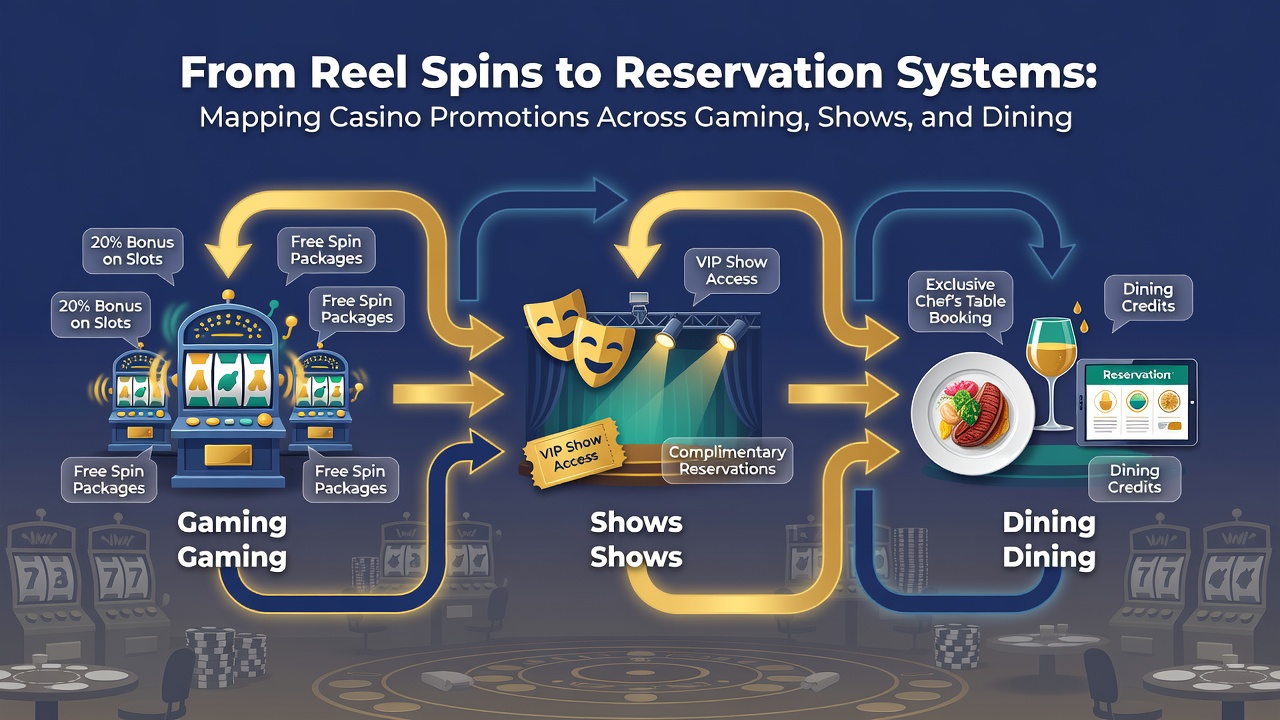
Dining Connections and Reservation Flows
Dining promotions map onto gaming and show activity through tiered loyalty structures that convert play points or ticket purchases into table priority or menu credits. Reservation platforms receive direct inputs from gaming systems, so a player completing a required number of spins receives an automated prompt for available dining times that match their visit window. Research compiled by the University of Nevada, Las Vegas International Gaming Institute documents how these automated flows increased table utilization rates in participating properties during recent reporting periods.
Seasonal adjustments appear in October 2026 schedules, where operators align dining promotions with fall entertainment lineups to maintain steady guest movement from gaming areas through restaurants and into performance spaces. The connections rely on shared APIs that update availability across all three categories simultaneously, preventing overbooking while maximizing cross-redemption opportunities.
Technology Infrastructure Supporting the Mapping
Backend platforms combine slot management software with ticketing and table reservation modules into single dashboards monitored by operations teams. These systems record each promotion trigger, from the initial reel outcome through the final reservation confirmation, creating audit trails used for compliance and performance analysis. External regulatory bodies in multiple jurisdictions require such traceable records to verify that promotions meet established standards for player incentives.
Updates rolled out ahead of October 2026 incorporated enhanced mobile interfaces that let guests view mapped promotion options on personal devices, pulling live data from the same central servers used by on-site staff. This expansion maintains consistency between physical gaming floors and remote booking channels without introducing separate loyalty ledgers.
Conclusion
The mapping of casino promotions across gaming, shows, and dining continues to rely on synchronized data systems that convert reel activity into reservation access points. Properties maintain these connections through ongoing software refinements and loyalty program adjustments, with measurable activity tracked across all three categories into late 2026. Operators continue to refine the interfaces to support efficient guest movement while meeting reporting requirements from oversight agencies.