Mapping Acoustic Feedback Loops Between Live Music Venues and Adjacent Gaming Zones in Large-Scale Properties
Noah Bauer · Jul 28, 2026
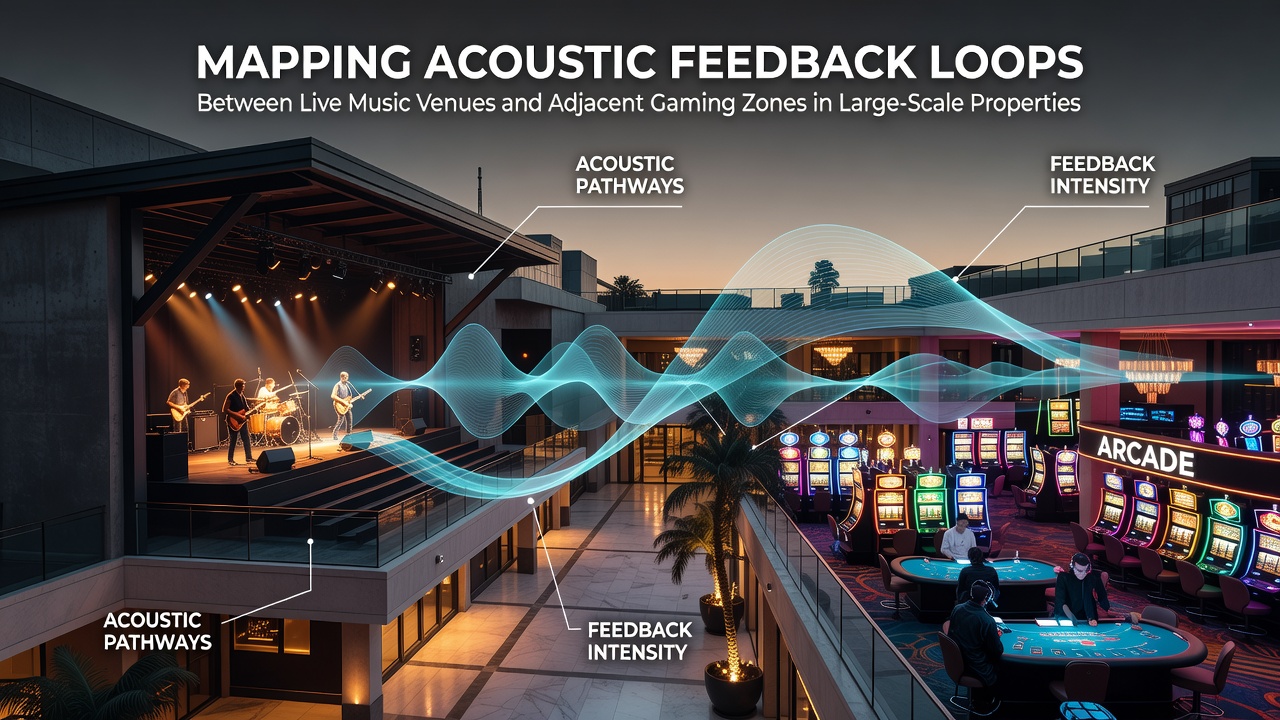
Mapping Acoustic Feedback Loops Between Live Music Venues and Adjacent Gaming Zones in Large-Scale Properties
Integrated resort developments continue to expand their entertainment offerings, and operators now track how sound from live music venues interacts with nearby gaming zones through detailed acoustic mapping projects. These feedback loops form when audio from performances travels through shared structures, reflects off surfaces, and combines with ambient noise from slot machines or table games, creating measurable patterns that affect both areas. Researchers at institutions like the University of Nevada Las Vegas have documented these interactions using sensor arrays placed along walls, ceilings, and ventilation systems to record frequency shifts and amplitude changes over time.
Understanding Sound Propagation in Mixed-Use Resort Spaces
Large properties place concert halls or club stages directly beside gaming floors, so bass frequencies from amplified performances move through concrete and steel frameworks while higher tones bounce off glass partitions and metal railings. Data collected during peak hours shows that low-frequency energy from drum kits or subwoofers travels farther than expected, reaching gaming zones where it overlaps with electronic chimes from machines and creates standing waves that alter perceived sound levels for players. Engineers measure these paths with software that plots decibel contours in real time, revealing loops where reflected sound returns to the stage and influences microphone pickup or monitor speakers.
July 2026 brought new sensor data from several properties in the southwestern United States that demonstrated how HVAC systems act as conduits for acoustic energy between venues and gaming areas. Technicians placed directional microphones along ductwork and recorded how music pulses synchronized with slot reel sounds during evening sets, producing interference patterns that required recalibration of both sound systems and gaming equipment. Observers note that these patterns appear most clearly when crowd density increases and doors between zones open and close frequently.
Techniques for Mapping Feedback Loops
Acoustic consultants deploy arrays of calibrated microphones and vibration sensors across multiple floors to capture three-dimensional sound fields, then feed the readings into modeling programs that simulate wave behavior under different occupancy and performance conditions. One common method involves generating test tones from the stage while recording responses at gaming stations, allowing teams to identify specific reflection points along corridors or above suspended ceilings. Software then generates heat maps that highlight zones where feedback intensity exceeds recommended thresholds for either entertainment or gaming comfort.
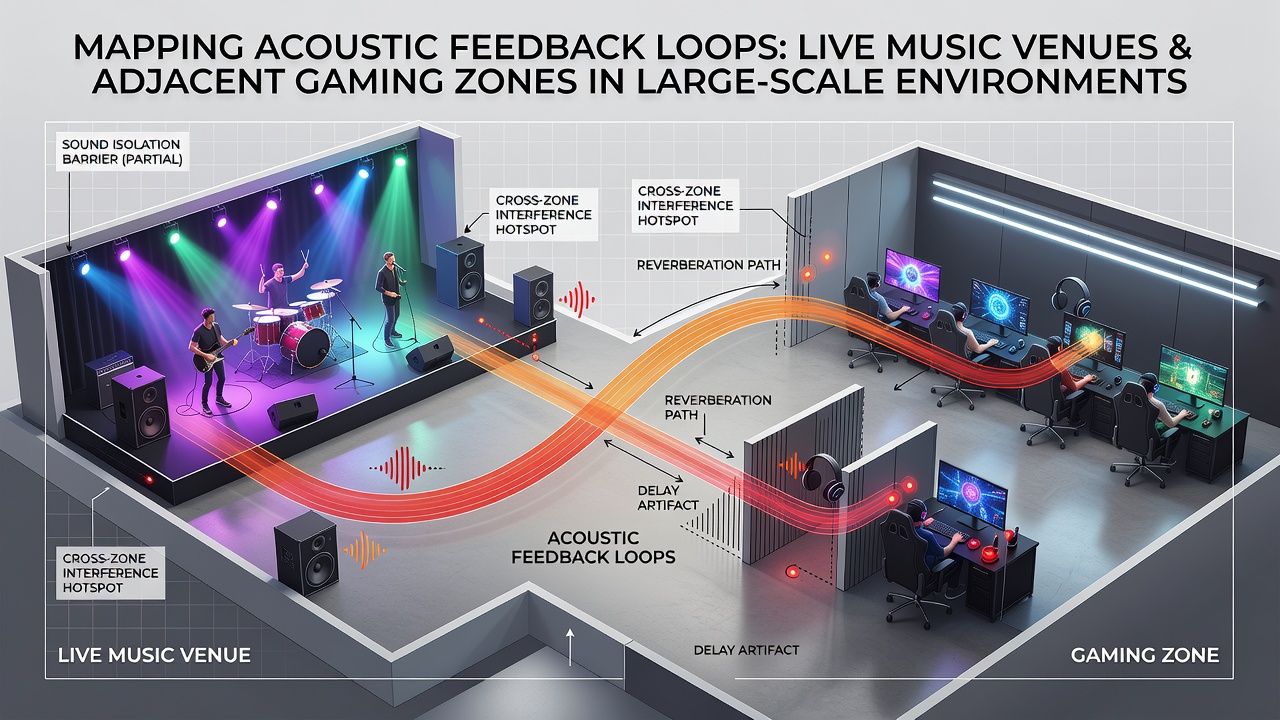
Properties in Macau and Singapore have adopted similar protocols after regional authorities updated environmental noise guidelines in early 2026, requiring operators to submit acoustic impact reports before expanding live entertainment schedules. Teams there combine laser vibrometry with traditional sound pressure measurements to trace how structural vibrations carry performance audio into gaming zones without airborne transmission. The resulting datasets help designers adjust speaker placement, install targeted absorbers, or modify floor transitions to break unwanted loops before they reach operational levels.
Case Examples from Operating Resorts
Take one resort in the northeastern United States where operators installed a temporary barrier wall between a new music venue and an adjacent high-limit gaming salon after initial mapping sessions revealed strong low-frequency coupling during weekend shows. Follow-up measurements indicated that the barrier reduced transmitted energy by 12 decibels across the 40-80 Hz range while preserving sightlines and foot traffic flow. Another property in Australia used phased array speakers and real-time processing to cancel specific frequencies that had been looping back into gaming areas, according to records shared with local gaming regulators.
Researchers continue to refine these mapping tools by incorporating machine learning models trained on months of continuous recordings from multiple sites. The models predict how changes in set lists, audience size, or gaming machine volume settings will shift feedback intensity, giving operators advance notice before events begin. Government agencies in Canada have begun requiring similar predictive reports for new integrated developments, citing data from the Canadian Acoustical Association on cumulative exposure in mixed environments.
Regulatory and Design Implications
Current standards from bodies such as the Occupational Safety and Health Administration address general workplace noise, yet resort operators now reference specialized studies when planning expansions that place music venues next to gaming zones. Acoustic mapping results often inform decisions about wall assemblies, floating floors, and active noise control systems that maintain separate acoustic signatures for each space. Properties that complete these studies before construction report fewer post-opening adjustments compared with those that rely on basic sound isolation calculations alone.
What's interesting is how gaming equipment itself contributes to the loops, since progressive jackpot displays and bonus round audio create intermittent high-frequency spikes that interact with music harmonics. Mapping teams now include gaming floor sound profiles in their models to account for this variable, which changes throughout the day as machine activity rises and falls. July 2026 reports from multiple properties showed that coordinated volume management between venues and gaming zones reduced overall measured energy by measurable margins without affecting either experience directly.
Conclusion
Mapping acoustic feedback loops provides operators with concrete data on how live music venues and gaming zones influence each other in large-scale properties. Continued sensor deployment, modeling advances, and regulatory updates ensure that these interactions receive systematic attention during both design and ongoing operations. Properties that integrate these findings into their planning processes maintain clearer separation between entertainment and gaming environments while meeting evolving standards across different regions.